
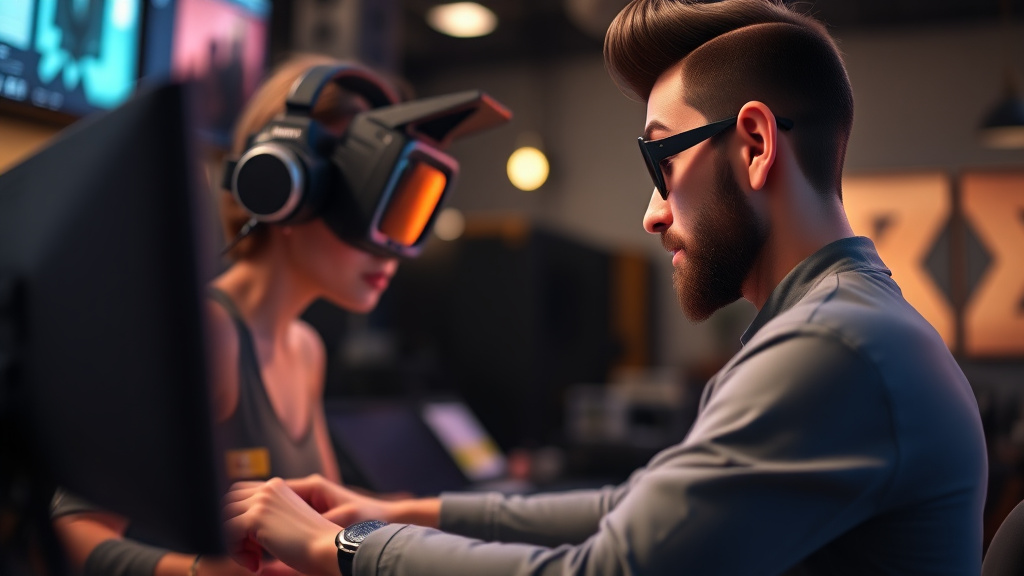
The animation industry stands at a pivotal turning point as advanced innovations reshapes how studios produce impressive graphics and compelling characters. From AI-powered motion capture to live rendering systems, these innovations are dramatically accelerating production timelines while elevating creative possibilities. This article examines how modern animation tools are transforming character development, allowing creators to craft more nuanced performances, and investigates the profound impact these advancements have on storytelling, studio workflows, and the evolution of animated media.
The Progression of Animation Technology in Modern Studios
From Traditional to Digital: A Paradigm Shift
The animation industry has witnessed a major transformation over the past two decades, shifting away from time-consuming conventional approaches to sophisticated digital workflows. Studios that once relied exclusively on hand-drawn frames and physical models now utilize advanced 3D software, cutting-edge rendering technology, and artificial intelligence to optimize workflows. This technical advancement has fundamentally changed how animators execute their work, allowing them to work faster without compromising quality. The shift represents more than simply new software, but a total reconception of creative possibilities and production methodologies.
Modern animation technology has made available professional-grade tools, allowing independent studios and creators to compete with major production houses. Online collaboration tools enable teams located worldwide to work seamlessly on the same projects simultaneously. Live rendering features have done away with lengthy render times that once prolonged deadlines by months. These advancements have significantly changed the financial structure of animation production, making high-quality visual effects more obtainable and budget-friendly than ever before in the industry’s history.
The incorporation of AI and machine learning into animation workflows marks the latest frontier in technological progress. AI-powered tools now handle repetitive work like in-betweening, cleanup, and motion generation, allowing artists to focus on creative decision-making and character nuance. These smart systems extract knowledge from current animation databases and can predict natural movement sequences based on minimal input. The effect is a marked acceleration in production timelines while maintaining creative vision and artistic integrity throughout the development process.
Key Technological Innovations Driving the Industry
Mocap technology has revolutionized character animation by translating real human performances into digital characters with remarkable precision and authenticity. Modern mocap systems use cutting-edge optical sensors, inertial sensors, and AI algorithms to capture subtle movements, facial expressions, and emotional nuances that would be virtually impossible to animate manually. This technology allows actors to execute acting that transfer seamlessly into digital characters, producing more believable and emotionally resonant animations. Studios now use mocap not just for combat sequences, but for complex dialogue scenes and dramatic performances requiring deep emotional authenticity.
Real-time rendering engines have revolutionized the animation production workflow by enabling artists to see final-quality results in real-time rather than enduring lengthy delays for the rendering process to conclude. These advanced platforms permit production staff to establish creative direction on-the-fly, explore lighting and effects in real-time, and iterate rapidly through multiple creative options. The ability to visualize completed projects immediately has greatly decreased production cycles and strengthened creative collaboration across the team, ultimately delivering higher-quality final products completed within faster schedules.
State-of-the-art Tools and Software Reshaping VFX
Modern animation studios utilize sophisticated software platforms that optimize VFX production while maintaining artistic excellence. Professional-grade tools like Maya, Houdini, and Unreal Engine equip artists with remarkable command over particle behavior, fluid simulation, and environmental design. These combined tools reduce rendering times significantly, enabling teams to iterate rapidly and experiment with intricate visual effects. The widespread availability of industry-level tools has given capability to freelance artists and compact production houses to deliver Hollywood-caliber effects once limited to major corporations with considerable funding and infrastructure.
Real-Time Rendering and Graphics Processor Computing
Live rendering systems have substantially changed visual effects workflows by eliminating lengthy processing backlogs that once consumed weeks of production time. GPU computing harnesses graphics processors to accelerate calculations, permitting artists to see modifications instantaneously rather than sitting through overnight renders. This instant feedback mechanism accelerates creative decision-making and allows directors to test lighting, effects, and compositions in real-time. Studios now implement real-time engines for pre-visualization planning, final rendering, and live demonstrations, significantly compressing production schedules while boosting creative flexibility and collaborative possibilities.
The shift toward GPU-accelerated rendering has made accessible high-end visual effects creation, making advanced capabilities available for mid-sized studios and independent productions. Cloud-based rendering services further expand accessibility by distributing computational loads across global server networks. This infrastructure allows smaller teams to tackle ambitious projects without maintaining high-cost in-house systems. Real-time capabilities also facilitate live collaboration between remote teams, allowing artists in different locations to contribute simultaneously to complex scenes and effects sequences.
- NVIDIA CUDA and AMD HIP speed up parallel processing computations
- Unreal Engine delivers real-time ray tracing for photorealistic visual output
- Blender’s CUDA integration delivers complimentary professional-level GPU acceleration
- Cloud rendering services lower computational expenses significantly
- Instant preview enables quicker design cycles
Character Development and Motion Capture Advancement
Mocap technology has significantly changed character development by allowing production companies to capture authentic human movement with exceptional detail. Actors work in motion capture suits fitted with sensors that transform their gestures and expressions into digital information, creating lifelike character animations. This technology allows filmmakers to retain the detailed acting work of skilled performers, resulting in characters that demonstrate authentic emotional resonance and realistic movement that traditional animation methods find difficult to match.
Modern motion capture systems now incorporate artificial intelligence to refine captured data, automatically correcting imperfections and boosting character realism. Studios leverage real-time rendering capabilities to visualize character performances in real time, enabling directors to deliver immediate feedback and make adjustments rapidly. This technical integration has significantly shortened production timelines while simultaneously elevating the quality of character animation, allowing creative teams to concentrate on storytelling rather than technical constraints.
